I. Key details of the whole installation process (including pre-processing, operation and verification)
1. Pre-installation pretreatment: eliminate source faults
Accurate check of size and tolerance:
Use a micrometer to measure the inner diameter (ID) and cross-section width (CS) of the sealing ring, and control the tolerance of the sealing groove within ±0.05mm to avoid excessive compression deformation or leakage caused by too small;
Check the surface roughness of the sealing groove and the shaft/hole, which needs to meet Ra≤1.6μm, and sand the groove burrs with fine sandpaper (especially the shaft end needs to be smoothed at 15-30°) to prevent scratching the lip.
Cleaning level requirements:
Use a dust-free cloth dipped in isopropyl alcohol to thoroughly wipe the sealing groove, sealing ring and installation tools to remove oil stains, metal shavings and dust (residual impurities of more than 0.05mg may cause sealing failure);
It is forbidden to wipe with cotton cloth or chemical fiber cloth to avoid fiber residue polluting the sealing surface.
Special environment pretreatment:
When installed at low temperature (below -20℃), preheat the sealing ring to room temperature (15-25℃) to prevent the rubber from hardening and cracking;
Before installation under high-temperature conditions, confirm that there is no thermal deformation in the sealing groove, give priority to FKM material and apply high-temperature compatible lubricant in advance.
2. The core operation of the installation process: precise control of details
Tool selection and use:
Special sleeves/guides made of plastic or nylon must be used, and it is forbidden to directly touch the sealing ring with sharp tools such as screwdrivers and pliers to avoid lip cuts;
When installing small specifications (such as MYA-3/MYA-5), the sealing ring can be gently put on the conical guide sleeve and pushed evenly into the groove to avoid unilateral stretching of more than 50%.
Lubrication and application skills:
Apply lubricants compatible with the medium (such as mineral oil-based grease, pneumatic special silicone oil), cover the lip of the sealing ring and the inner wall of the sealing groove, and control the thickness at 0.1-0.2mm, so as not to cause too much oil pollution;
It is strictly forbidden to use lubricants containing graphite and molybdenum disulfide, which will corrode the rubber material and affect the sealing effect.
Direction and posture control:
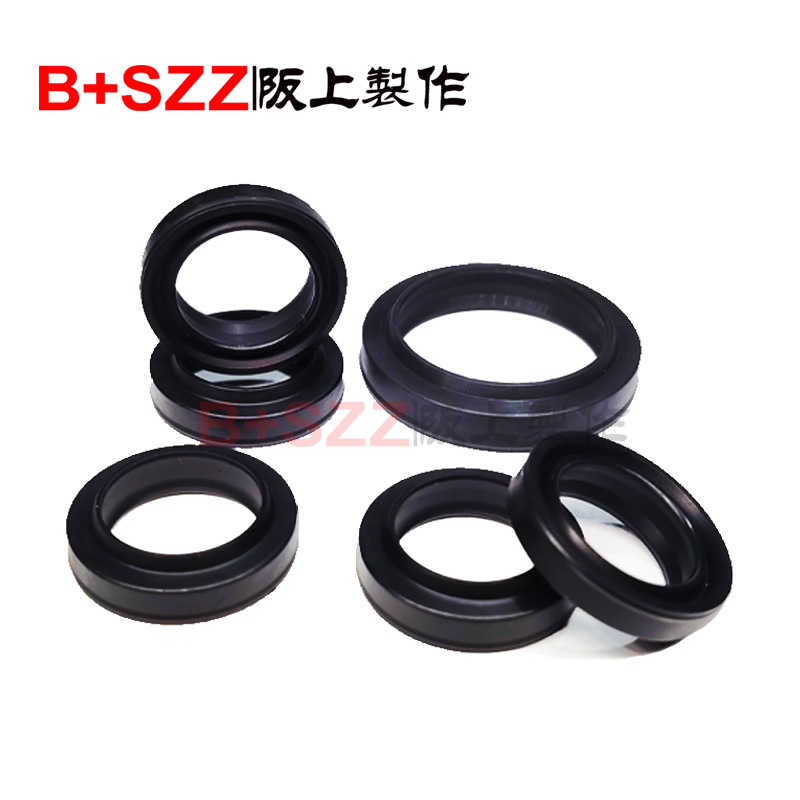
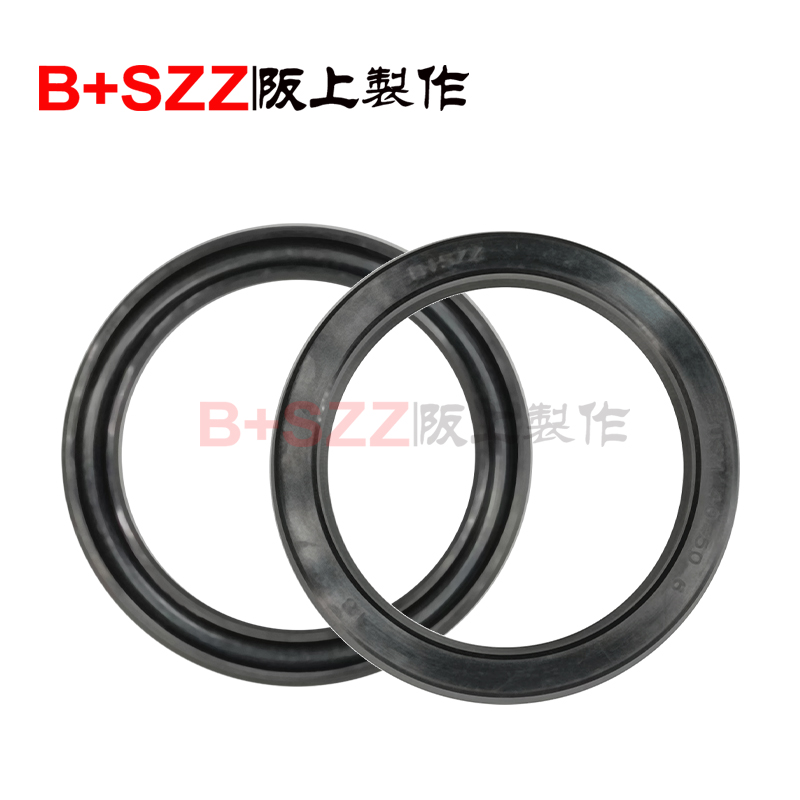
The lip mouth must face the pressure side (the direction of media inflow), the side with the brand logo must face outward, and the U-shaped flat end must face the outside (dust-proof side). If it is installed, it will directly lead to leakage;
When installing, gently press the sealing ring to ensure that it is completely embedded in the groove, without distortion or curling (if the deformation exceeds 5%, it needs to be replaced with a new product).
3. Post-installation verification: double confirmation effect
Appearance inspection: Use a 5x magnifying glass to observe that there are no scratches or edges on the lips, and the sealing ring fits the groove wall without gaps, and there is no protrusion or offset;
Functional test:
Low-pressure leak test: fill in 0.1-0.2MPa gas, apply the sealed part with soapy water, and no bubbles are qualified;
Dynamic test: 5-10 minutes of no-load operation, no leakage, no abnormal friction sound, and stable operation temperature of the equipment (NBR material does not exceed 70℃, FKM material does not exceed 150℃).
II. Details of daily maintenance and life extension
1. Regularly check the cycle and content
Routine working conditions: clean and check the sealing surface every 3 months, focusing on whether the lip is worn, hardened and cracked, and whether there are impurities on the dust-proof side;
Severe working conditions (dusty, high temperature, high-frequency movement): check once a month, and additionally measure the compression of the sealing ring. If it is less than 80% of the initial value, it needs to be replaced in advance;
Key equipment (such as precision manipulators, solenoid valves): comprehensive inspection every 1000 hours of operation, synchronously check whether there are wear grooves on the surface of the shaft/hole.
2. Cleaning and maintenance skills
When cleaning, use a soft cloth dipped in neutral detergents (such as diluted detergent) to wipe, avoid the use of acetone, gasoline and other strong solvents to prevent rubber aging and cracking;
Thoroughly dry the sealed surface after cleaning to avoid moisture residue causing mold growth or rubber swelling;
Apply rubber protective agent (non-petroleum-based) to the sealing ring every 6 months to maintain the flexibility of the material and prolong the aging cycle.
3. Fault warning and replacement timing
Replace it immediately in the following cases:
There is continuous leakage in the sealed part, and the pressure of the equipment drops too fast;
There are obvious scratches, notches or hardening cracks on the lips (inelastic rebound when pressed with fingers);
The surface of the sealing ring is black and sticky (high-temperature ablation or medium corrosion);
When replacing, it is necessary to replace the new product of the same specification as a whole, and the second use of the old sealing ring is prohibited. Even if there is no obvious damage to the appearance, its sealing performance has been reduced.
4. Storage and backup management
The spare sealing ring should be sealed and stored in a cool and dry place (temperature 10-25℃, humidity ≤60%), away from direct sunlight, ozone sources (such as welding machines) and oil stains;
Avoid stacking and squeezing when storing, and can be hung or tiled to prevent permanent deformation;
Shelf life: 12 months for NBR material and 24 months for FKM material. After the deadline, the size and elasticity need to be re-tested before use.
Original text from: pneumatic seal https://www.bszzseal.com/