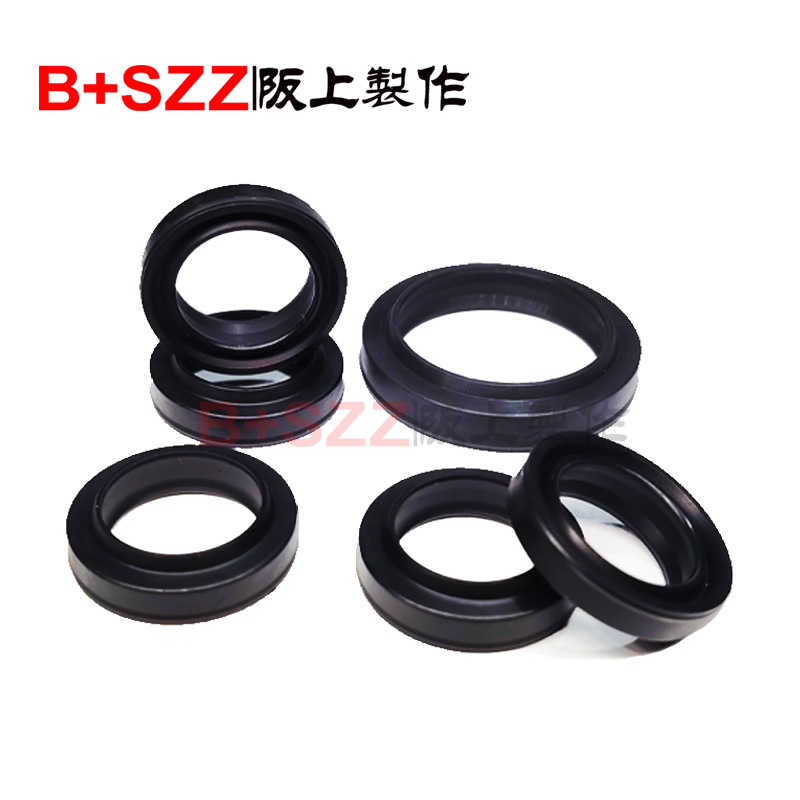
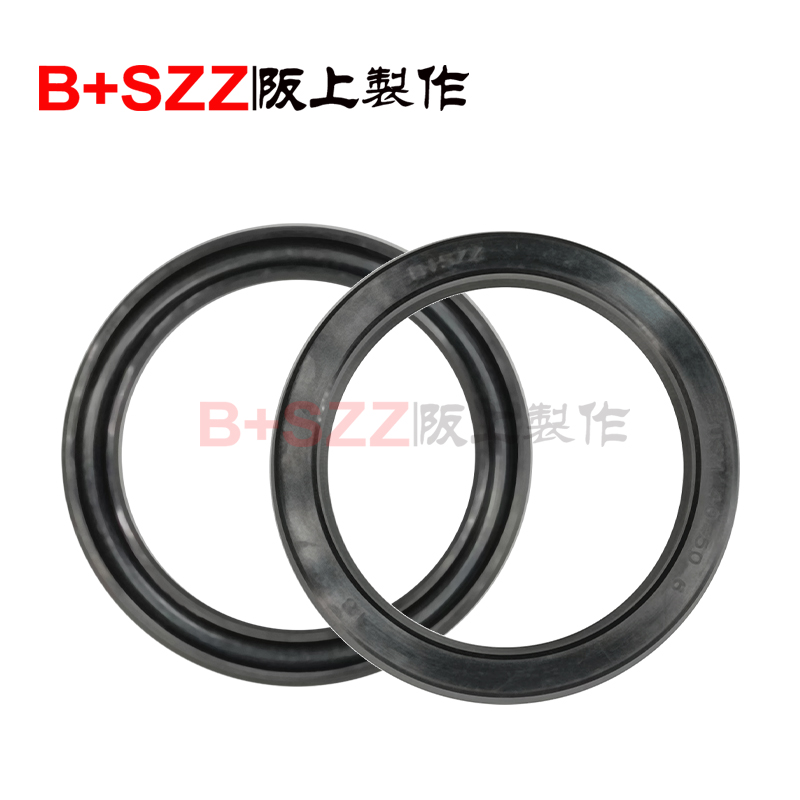
The BSN-Type Piston Rod Seal is an engineered sealing solution specifically developed for high-speed pneumatic and gas-pressure applications. Featuring the proprietary BSN (Balanced Static & Dynamic) Gas-Phase Architecture, it addresses the unique challenges of gas sealing—minimal lubrication, rapid pressure changes, and low-viscosity media—by combining a dynamic pressure-balance design with contaminant exclusion technology.
Primary Gas Seal Lip: Engineered with a gas-film adaptive profile that maintains a consistent micro-gas-film under dynamic conditions, reducing dry-running friction and wear.
Pressure-Balancing Chamber: A patented internal cavity structure that equalizes pressure differentials across the seal during rapid pressure changes, preventing lip-flutter and instability.
Static Auxiliary Lip: Ensures zero-leakage during system depressurization and standstill periods.
Primary Dynamic Wiper: A stiff, angled polyurethane lip designed for dry or minimally lubricated environments, efficiently removing external dust and particles.
Secondary Labyrinth Seal: A non-contact, micro-grooved PTFE ring that creates a tortuous path for contaminant ingress, particularly effective against fine airborne particles.
Particle Ejection Channel: A forward-angled groove design that utilizes piston rod motion to actively expel trapped contaminants outward.
PTFE-Based Low-Friction Coating: The primary sealing lip is impregnated or coated with a proprietary PTFE blend, ensuring a consistently low coefficient of friction (0.02-0.08) against dry or semi-dry rods.
Thermally Conductive Backing Element: An optional integrated metal or filled polymer element enhances heat transfer away from the critical sealing interface, critical for high-speed applications.
| Material Code | Base Material | Temp. Range | Key Features & Typical Applications |
|---|---|---|---|
| BSN-PU90 | Polyurethane (90 Shore A) | -35°C to +100°C | Standard pneumatic systems, high abrasion resistance. |
| BSN-PTFE | Engineered PTFE Compound | -80°C to +200°C | Dry-running, ultra-high speed, cleanroom applications. |
| BSN-HNBR70 | HNBR (70 Shore A) | -40°C to +150°C | Hot air or slightly lubricated gas, excellent resilience. |
| BSN-TPE | Thermoplastic Elastomer | -50°C to +120°C | Cost-effective, suitable for low-pressure air cylinders. |
| Parameter | Specifications | Test Standard / Conditions |
|---|---|---|
| Pressure Range | 0 – 1.6 MPa (Dynamic) / 0 – 2.5 MPa (Static) | ISO 6431, VDMA 24562 |
| Speed Capability | ≤ 3.5 m/s (Dry), ≤ 5.0 m/s (Lubricated) | |
| Friction Coefficient | 0.02 – 0.12 (Dry against steel) | ASTM D1894 |
| Leakage Rate | < 0.01 sccm (Standard Air @ 0.7 MPa) | ISO 19973-3 |
| Service Life | > 3,000 km (Travel, Clean & Lubricated Air) | Accelerated Life Test |
High-Speed Pneumatic Cylinders: Pick-and-place robots, automation drives.
Dry-Running Gas Compressors & Boosters.
Clean & Sensitive Environments: Food & beverage, pharmaceutical, and semiconductor manufacturing equipment.
High-Cycle Automation: Packaging machinery, stamping presses.
Low-Friction Critical Applications: Precision metrology and positioning systems.
Rod Hardness: ≥ HRC 40 recommended.
Surface Finish: Ra 0.05 – 0.2 µm, polished or roller-burnished finish is ideal.
Surface Treatment: Hard chrome plating, nickel plating, or stainless steel rods.
Use of a tapered installation sleeve is mandatory to prevent damage to the sharp, low-friction sealing edge.
Ensure the seal is installed in the correct orientation—the primary gas seal lip faces the pressurized side, and the wiper lip faces the external environment.
For dry applications, initial lubrication of the rod with a minimal amount of compatible grease (e.g., PFPE-based) can extend run-in life (consult manufacturer).
Follow BSN-specific gland drawings (available upon request).
Gland Finish: Ra ≤ 1.6 µm.
Lead-in Chamfer: 15° – 20° is recommended.
Engineered for Gas: Specifically designed to handle the compressibility and low viscosity of gases, preventing blow-by and instability.
Superior Contaminant Exclusion: The multi-stage barrier system offers exceptional protection in dusty environments, reducing rod scoring and internal contamination.
Ultra-Low Friction: PTFE-based technology minimizes stiction and running resistance, crucial for energy efficiency and precise motion control.
High-Speed Capability: Stable geometry and heat management allow for reliable operation at velocities where traditional seals would fail.
Technical Note: The BSN (Balanced Static & Dynamic) Gas-Phase Architecture is a proprietary design focusing on stability and lubrication challenges inherent in gas sealing. This product line is the result of extensive R&D in gas film dynamics and tribology. Performance data is based on laboratory testing; actual service life is highly dependent on operating conditions, media, and maintenance.
Original source: Hydraulic seal https://www.bszzseal.com/