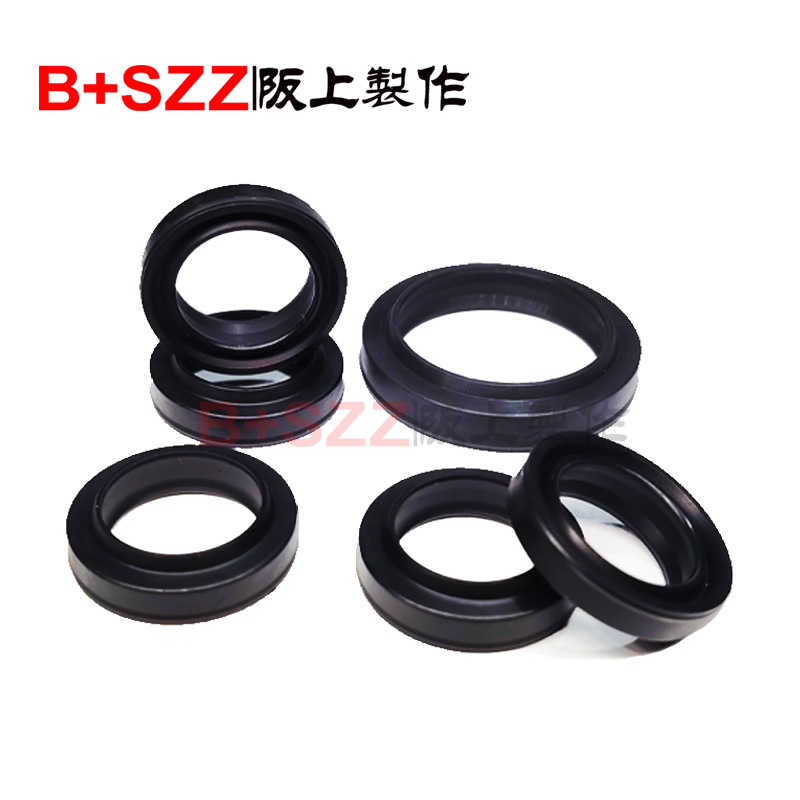
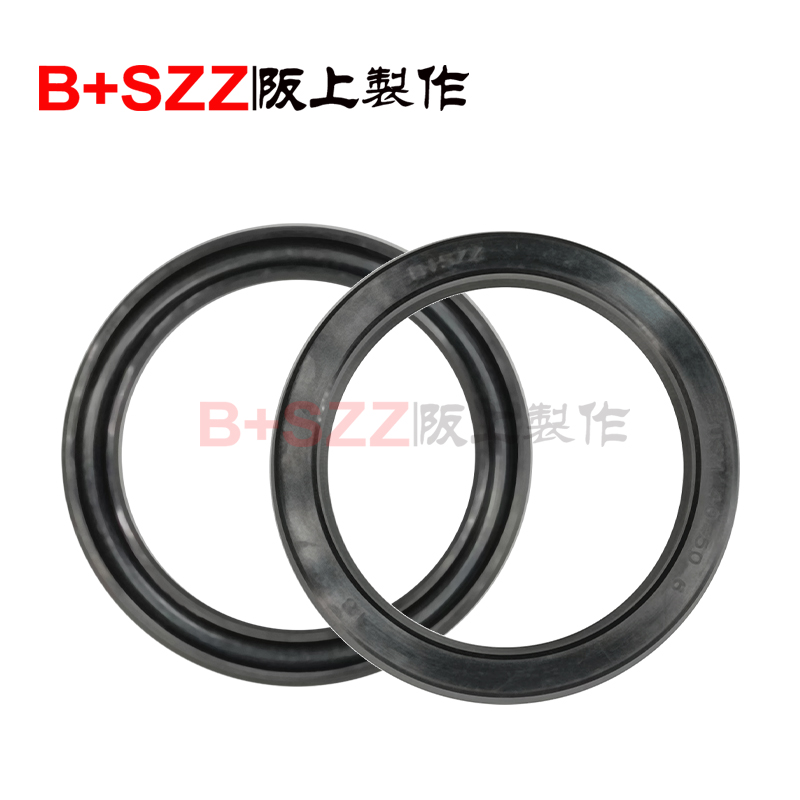
The JX-Type Piston Rod Seal represents a breakthrough in sealing technology for extreme-duty applications. Featuring the innovative JX (Joint-adaptive & eXpandable) Regenerative Architecture, this seal incorporates built-in micro-lubrication channels and adaptive geometry that actively responds to operating conditions, dramatically extending service life in abrasive, high-load, or poorly lubricated environments.
Self-Replenishing Lubricant Reservoirs: Embedded micro-porous polymer structures within the seal body slowly release specially formulated solid lubricants (e.g., MOS₂, graphite) during operation.
Dual-Directional Lubricant Channels: A network of microscopic grooves directs released lubricant both toward the rod interface (reducing friction) and outward (preventing contaminant ingress).
Pressure-Activated Release: Lubricant release rate increases proportionally with system pressure and temperature, ensuring optimal lubrication under demanding conditions.
Independent Sealing Segments: The primary sealing lip is divided into multiple independent arc segments, each capable of radial micro-movement to compensate for rod eccentricity and deformation (up to ±0.5 mm).
Elastic Interconnectors: Flexible bridges between segments maintain overall seal integrity while allowing independent adaptation.
Wear-Compensating Design: As the sealing edge wears, internal elastic elements gradually expand, maintaining consistent contact pressure over an extended wear range.
Helical Ejection Grooves: Angled grooves on the atmospheric side utilize rod motion to create a directional pumping effect, actively expelling ingested contaminants.
Two-Stage Particle Barrier: A primary coarse particle barrier and a secondary fine-filtration lip work in tandem to protect the main sealing interface.
Sacrificial Wear Zone: A replaceable front-end wear sleeve protects the main seal body in highly abrasive environments.
| Material Code | Base Material | Temperature Range | Special Additives | Key Application |
|---|---|---|---|---|
| JX-UR80 | Ultra-Resistant Polyurethane | -40°C to +110°C | Reinforced fibers, solid lubricants | Mining, steel mill equipment |
| JX-FP | Fluoropolymer Composite | -60°C to +200°C | Carbon nanotubes, PTFE | Chemical processing, dry-running systems |
| JX-AR | Aramid-Reinforced Rubber | -30°C to +150°C | Aramide fibers, anti-hydrolysis agents | Marine, offshore, high-pressure water |
| JX-TC | Thermally Conductive Elastomer | -20°C to +180°C | Ceramic particles, graphene | High-speed applications with heat buildup |
| Parameter | Specification | Test Standard |
|---|---|---|
| Pressure Range | 0 – 50 MPa (Static), 0 – 42 MPa (Dynamic) | ISO 5597/1 |
| Speed Range | 0.01 – 1.2 m/s (Optimal for abrasive conditions) | |
| Friction Coefficient | 0.06 – 0.20 (Stable over life cycle) | ASTM D1894 |
| Wear Compensation | Up to 1.5 mm radial wear | Accelerated wear test |
| Eccentricity Compensation | ≤ 0.5 mm (Dynamic) | |
| Service Life | 2-4x industry standard in comparable harsh conditions | Field validation reports |
Extreme Abrasive Environments: Hydraulic cylinders in mining excavators, dredging equipment, and concrete machinery.
Poor or Intermittent Lubrication: Remote or maintenance-intensive equipment.
High Side-Load Conditions: Misaligned cylinders in heavy machinery.
Long-Life Requirement Applications: Where maintenance downtime is extremely costly (e.g., offshore platforms, tunnel boring machines).
High-Pressure Water Hydraulics (JX-AR variant).
Rod Hardness: Minimum 55 HRC recommended for abrasive service. Coating (e.g., HVOF, ceramic) strongly advised.
Surface Finish: Ra 0.1 – 0.3 µm with proper cross-hatch pattern for lubricant retention.
Gland Design: Requires JX-specific, deep-groove design to accommodate the multi-component system. Chamfers are critical.
Must use the proprietary JX installation kit to correctly assemble the multi-part seal and sacrificial wear sleeve.
Pre-soak the seal in clean system fluid for 24 hours before installation (for elastomeric variants).
Initial Run-in: Operate at reduced pressure (20-30% of max) for the first 50-100 cycles to establish the lubricant film.
The Sacrificial Wear Sleeve can be replaced during routine maintenance without disassembling the main seal, significantly reducing downtime.
Unmatched Life in Harsh Conditions: The regenerative lubrication and wear compensation directly target the main failure modes in abrasive/dirty environments.
Reduced Total Cost of Ownership: Dramatically extends maintenance intervals and protects expensive components (rods, cylinders) from damage.
Exceptional Reliability: Adaptive design maintains consistent sealing performance despite rod wear, misalignment, and variable conditions.
Active Protection: The contaminant expulsion system proactively manages the sealing environment rather than just acting as a passive barrier.
Technical Note: The JX (Joint-adaptive & eXpandable) Architecture is a patented, multi-functional sealing system. Its performance, particularly regarding service life extension, is based on controlled field tests in partner industries. The self-lubricating components are matched to common hydraulic fluids and mineral-based oils; compatibility with special fluids (e.g., HFD-R) should be verified.
Original source: Hydraulic seal https://www.bszzseal.com/