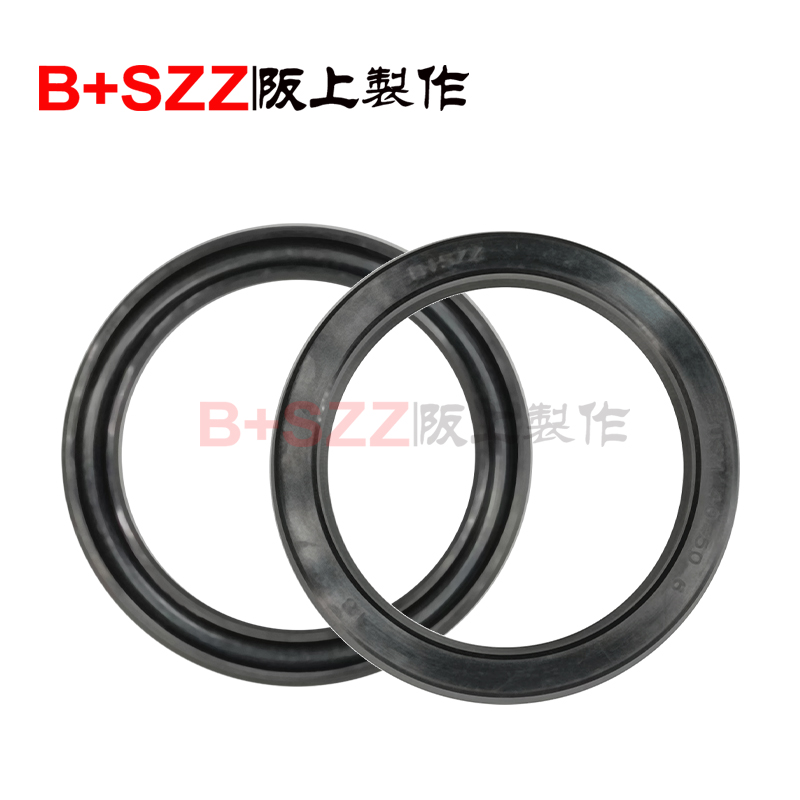
Atmospheric Pressure-Compensated Zero-Leakage System
The Diaphragm-Type Piston Rod Seal is a revolution in static and low-speed dynamic sealing, designed for applications where absolute zero leakage is non-negotiable. By integrating a flexible metallic diaphragm with a hydrostatic pressure compensation chamber, this seal achieves leakage rates below 1×10⁻⁶ cc/sec—effectively creating a hermetic barrier while maintaining minimal friction. Ideal for hazardous fluid containment, vacuum systems, and precision metering applications.
Welded Bellows Design: 316L stainless steel bellows with laser-welded convolutions provides a hermetically sealed, zero-permeation barrier between the fluid chamber and atmosphere.
Pressure-Equalization Port: Internal channel connects the diaphragm’s atmospheric side to a secondary compensation chamber, eliminating pressure differential across the flexible element.
Axial Stiffness Optimization: Convolution geometry engineered to provide minimal resistance to rod motion while maintaining structural integrity up to 15 MPa.
Primary Sealing Chamber: Contains system fluid, pressurized during operation.
Compensation Chamber: Filled with clean barrier fluid (typically same as system fluid), actively maintained at system pressure via micro-piston pump.
Differential Pressure Sensor: Monitors pressure difference between chambers, activating correction within ±0.01 bar.
Non-Contact Labyrinth Seal: Primary defense against particulate ingress, creates viscous barrier without wear.
Emergency Lip Seal: Engages only if diaphragm integrity is compromised, providing fail-safe containment.
Leak Detection Port: Between labyrinth and emergency seal for continuous monitoring of barrier fluid integrity.
| Parameter | Specification | Test Standard |
|---|---|---|
| Leakage Rate | < 1×10⁻⁶ cc/sec helium @ 10 bar | ISO 15848-1 |
| Pressure Range | Full vacuum to 15 MPa | ASME B40.100 |
| Stroke Length | Standard: ±50 mm, Custom: ±200 mm | |
| Operating Speed | 0–0.5 m/s (optimal), 1.0 m/s (max) | ISO 10766 |
| Friction | < 5 N breakout force @ 10 MPa | ASTM D1894 |
| Temperature | –60°C to +230°C (bellows dependent) | ASTM D1329 |
| Cycle Life | > 10⁷ cycles (diaphragm) | ASTM F2878 |
| Component | Material Options | Special Features |
|---|---|---|
| Diaphragm | 316L, Inconel 625, Hastelloy C-276 | Electropolished, < 0.8 µm Ra |
| Compensation Piston | Ceramic-coated aluminum | Diamond-like carbon coating |
| Housing | 17-4PH stainless steel | Passivated per ASTM A967 |
| Barrier Fluid | System-matched or fluorinated oil | < 10 cSt viscosity recommended |
| Labyrinth Seal | PEEK-CF30 | Laser-machined spiral grooves |
System Pressure → Primary Chamber → Flexible Diaphragm Deforms
                    ↓
Compensation Chamber Pressure Adjusted to Match → Zero ΔP Across Diaphragm
                    ↓
Diaphragm Experiences No Stress → Zero Leakage Path
                    ↓
Rod Motion → Diaphragm Convolutions Flex → Minimal Friction
Key Advantage: The diaphragm sees no net pressure differential, eliminating the primary driver of seal leakage while allowing nearly frictionless rod movement.
Chemical Processing: Chlorine, phosgene, HF acid, and other lethal fluid handling
Nuclear: Primary coolant loops, radioactive fluid transfer systems
Semiconductor: Ultra-high-purity chemical delivery, CVD precursor handling
Pharmaceutical: Potent compound containment, bioreactor sampling systems
Analytical Instruments: HPLC pump seals, syringe pump drives
Metrology: Dead-weight tester pistons, pressure balance systems
Optics: Vacuum chamber motion feedthroughs for lithography
Deep Sea: Pressure-balanced observatory penetrators
Space: Satellite fuel valve actuators, vacuum chamber manipulators
Energy: Hydrogen compressor rod seals, CO₂ sequestration monitoring
Cleanroom Assembly: Class 1000 or better environment required
Surface Finish: Rod Ra ≤ 0.05 µm, hardness ≥ 58 HRC
Alignment: Angular misalignment < 0.05° over full stroke
Fluid Preparation: Barrier fluid must be filtered to 1 µm absolute
Vacuum Bake-Out: Heat to 150°C under vacuum for 24 hours (for ultra-clean applications)
Pressure Cycling: 0–100% rated pressure for 50 cycles to seat components
Leak Testing: Helium mass spectrometer test at 1.5× operating pressure
Compensation System Calibration: Set zero point with system at rest
Differential Pressure Gauge: Analog or digital readout
Barrier Fluid Level Sensor: Ultrasonic or capacitive type
Leak Detection: Mass spectrometer or fluorescent dye system
Monthly: Check differential pressure and barrier fluid level
Quarterly: Verify compensation system response time
Annually: Helium leak test and diaphragm visual inspection (via borescope)
Diaphragm Fatigue: Gradual increase in differential pressure readings
Compensation System Failure: Automatic switch to backup pump, audible alarm
Catastrophic Diaphragm Rupture: Emergency lip seal engages, leak detection port activates
Cycles Remaining: Based on diaphragm convolution fatigue tracking
Barrier Fluid Contamination: Particle count trend analysis
Historical ΔP Data: Rate of change indicates wear progression
Absolute Containment: Metal diaphragm provides zero-permeation barrier unmatched by polymeric seals
Near-Zero Friction: Pressure-balanced design minimizes breakout force and stick-slip
Dual Failure Protection: Multiple independent sealing barriers with active monitoring
Fluid Compatibility: Diaphragm material selectable for virtually any chemical
Predictable Life: Diaphragm fatigue life calculable with >90% accuracy
Nuclear: ASME III Class A, 10 CFR 50 Appendix B
Semiconductor: SEMI S2/S8, USP Class VI (elastomer components)
Aerospace: NASA-STD-6012, ESA ECSS-Q-70
Pressure Equipment: PED 2014/68/EU, ASME BPVC Section VIII Div.1
Leak Testing: Certified per ISO 20485 (helium leak testing)
Design Note: The diaphragm seal represents the ultimate solution when leakage is unacceptable. While more complex and costly than conventional seals, its total cost of ownership is often lower when considering environmental compliance, product loss prevention, and safety system requirements. Not recommended for high-speed (>1 m/s) or high particulate applications without extensive pre-filtration. Custom designs available for extreme stroke, temperature, or corrosion requirements.
Original source: Hydraulic seal https://www.bszzseal.com/