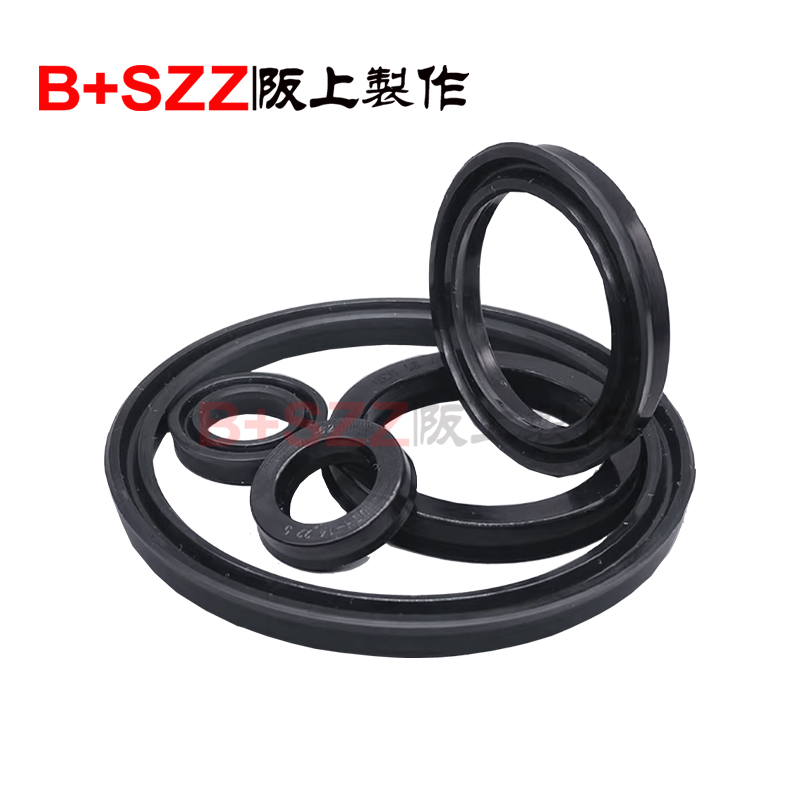
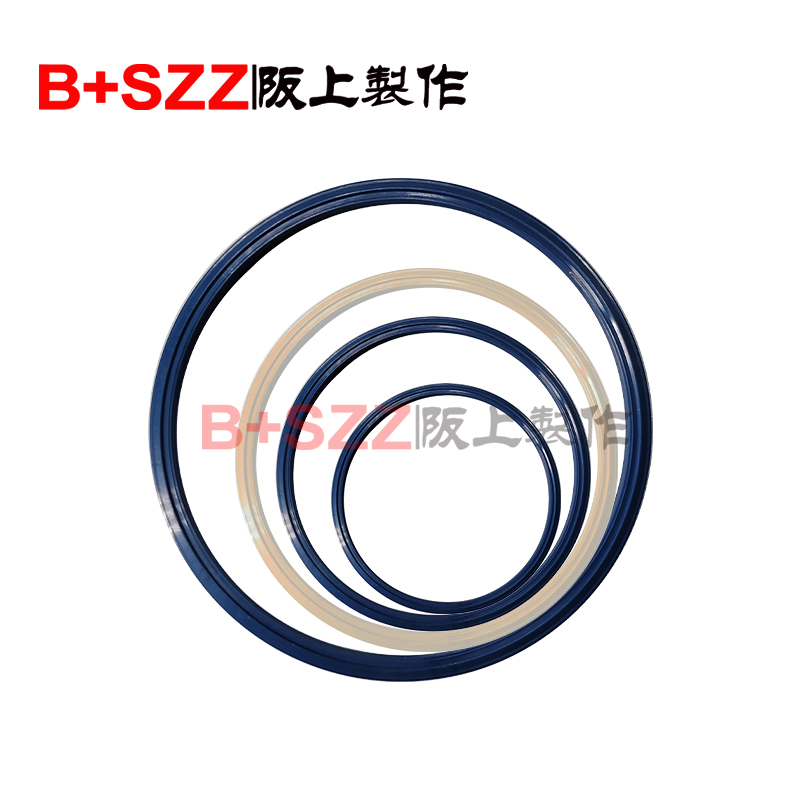
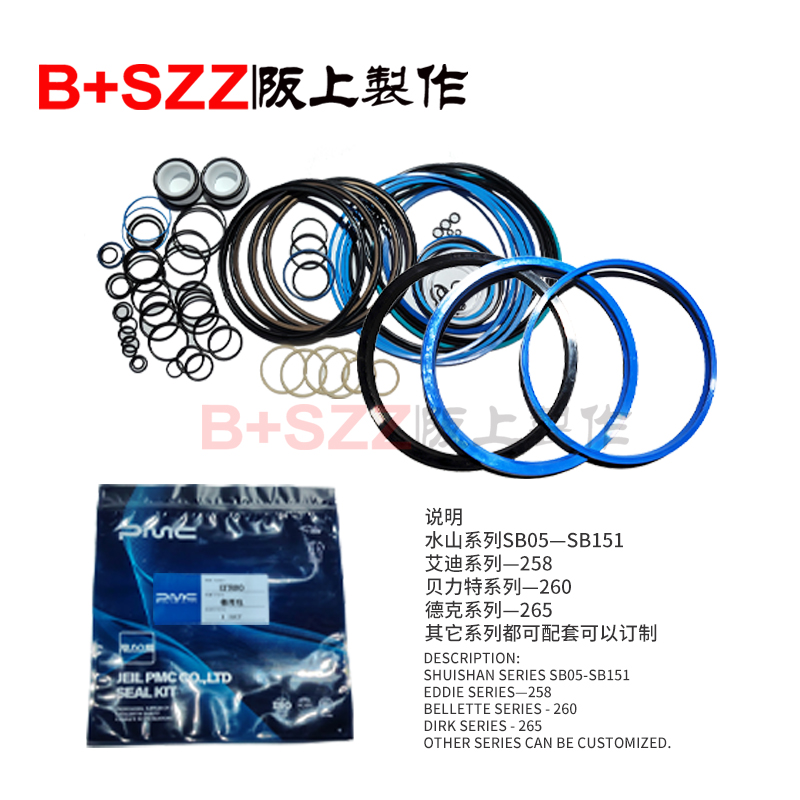
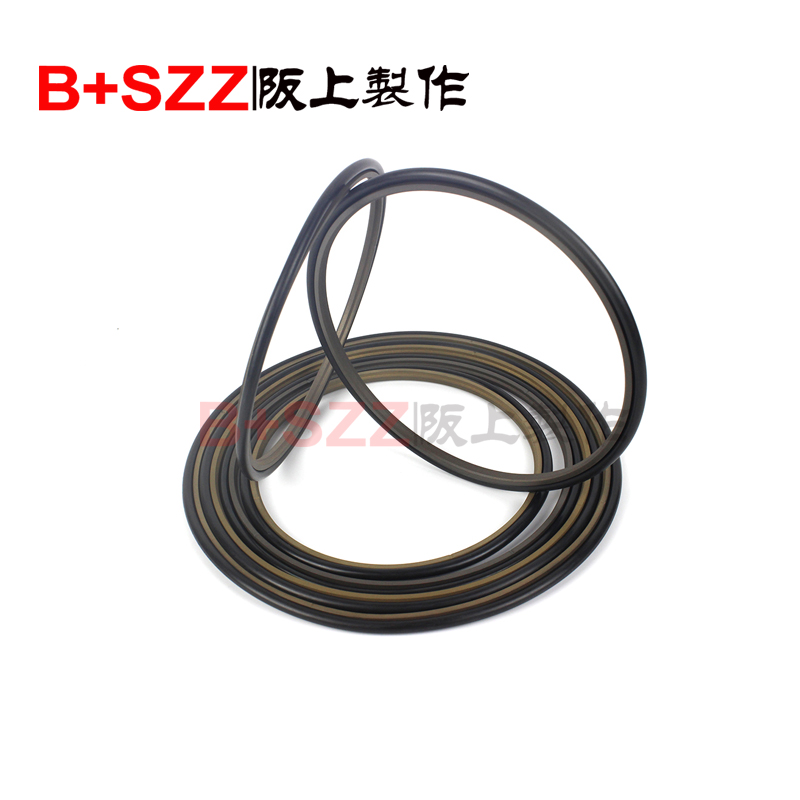
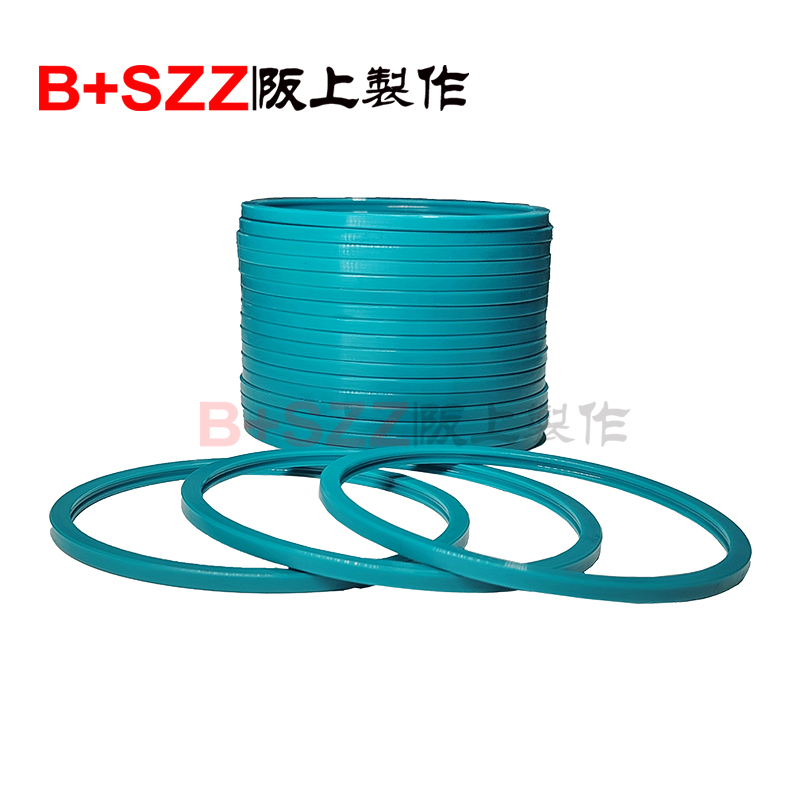
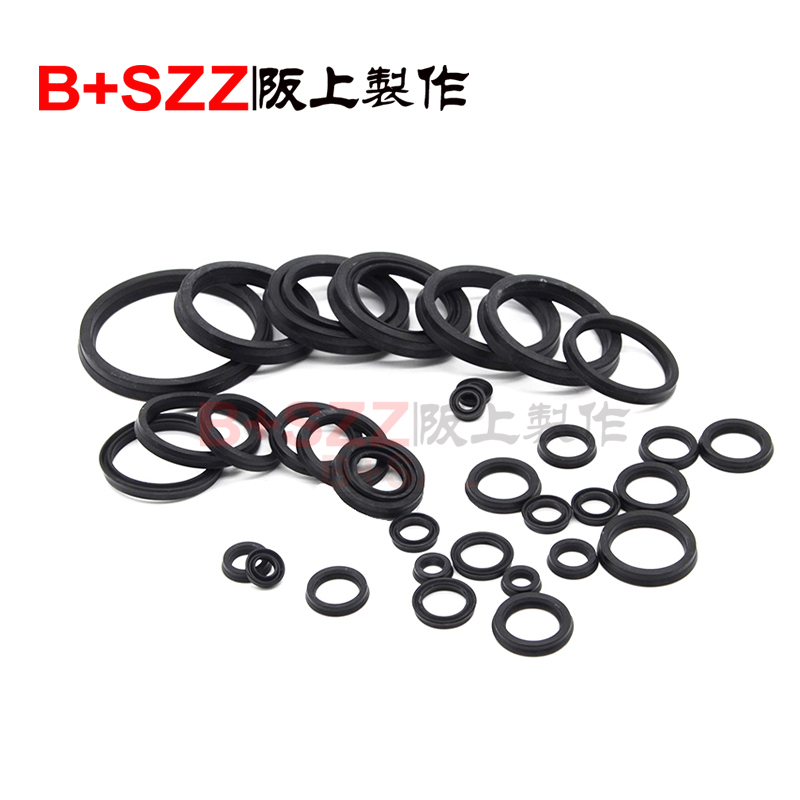
A Pneumatic GLY Sealing Ring is a specialized double-a cting, spring-energized rod seal designed for demanding pneumatic applications. The “GLY” designation typically represents a specific lip geometry and material composition optimized for:
Extremely low friction
Zero-leakage requirements
Long service life in high-cycle pneumatic systems

Unique GLY Features:
Symmetrical Double-Lip Design: Both sides feature identical sealing lips, enabling effective sealing in both stroke directions (double-acting).
Integral Garter Spring: A stainless steel coil spring is fully embedded within the seal’s polymer body, providing constant radial force.
Low-Friction Geometry: The lip angles and contact surfaces are optimized to reduce breakout and running friction.
Anti-Extrusion Design: Often incorporates built-in anti-extrusion elements or is paired with dedicated backup rings in high-pressure applications.
Material Composition:
Sealing Element: Special-grade polyurethane (PU) with modified formulations for enhanced elasticity and wear resistance.
Alternative: PTFE-based compounds for ultra-low friction and chemical resistance.
Spring Material: AISI 302/304 stainless steel or Inconel for corrosive environments.
Color Coding: Often green or blue to distinguish from standard single-acting seals.
Pressure Range: 0 to 16+ bar (232+ psi) pneumatic
Temperature Range: -30°C to +100°C (-22°F to +212°F) standard
Speed: Excellent for high-speed applications (>1 m/s)
Friction: 30-50% lower than standard U-cups
Leakage: True zero-leakage capability, even at static conditions
Bidirectional Sealing: Seals pressure from both directions without reconfiguration.
Low-Friction Operation: Minimizes stick-slip and enables precise motion control.
Contaminant Exclusion: The double-lip design provides redundant protection.
Long Maintenance Intervals: Superior wear resistance extends service life.
| Feature | GLY Seal | Standard U-Cup |
|---|---|---|
| Acting | Double-acting | Single-acting |
| Low-Pressure Sealing | Excellent (spring-loaded) | Poor without spring |
| Friction | Very low | Moderate to high |
| Installation | One symmetrical part | Must be oriented correctly |
| Cost | Higher | Lower |
Precision Pneumatics: Medical devices, laboratory equipment
High-Cycle Automation: Pick-and-place, assembly robotics
Leak-Critical Systems: Food/beverage, semiconductor manufacturing
Cleanroom Applications: Electronics, pharmaceutical production
Energy-Efficient Systems: Where air consumption must be minimized

Critical Dimensions:
Rod Diameter (d₁)
Housing Bore (d₂)
Groove Width (L)
Installation Procedure:
No Orientation Needed: Install symmetrical GLY seal in either direction.
Spring Inspection: Ensure the spring is properly seated before installation.
Tooling Required: Always use installation sleeves/cones to protect lips.
Lubrication: Apply thin film of silicone-free pneumatic grease.
Clearance Check: Verify radial clearance matches manufacturer specifications.
Common Installation Errors:
Stretching seal over sharp edges without protection
Using petroleum-based lubricants that degrade PU
Incorrect groove depth (causes compression or inadequate sealing)
While “GLY” may be one manufacturer’s code, similar double-acting spring-energized seals include:
| Manufacturer | Equivalent Series | Notes |
|---|---|---|
| Parker | PGR / PGD | Polyurethane double-acting rod seals |
| Trelleborg | Tornado® RS | PTFE-based, extremely low friction |
| Freudenberg | Simmerring® PDR | Double-acting pneumatic rod seal |
| Hallite | HDS Series | Spring-energized double-acting |
| NOK | GY Series | Japanese equivalent |
Common Failure Modes:
Spring Fatigue: Loss of tension after 5-10 million cycles
Lip Abrasion: From contaminated air or poor rod finish
Chemical Attack: From incompatible lubricants or air treatment chemicals
Installation Damage: Nicked or cut lips during assembly
Troubleshooting Guide:
Problem: Gradual leakage increase
Likely Cause: Spring fatigue or normal wear
Solution: Scheduled replacement after 10M cycles
Problem: Immediate leakage after installation
Likely Cause: Installation damage or incorrect groove dimensions
Solution: Inspect seal and verify dimensions
Problem: High friction/stick-slip
Likely Cause: Dry operation or incompatible materials
Solution: Proper lubrication and material review
When specifying a GLY-type seal, verify:
Double-acting requirement confirmed
Zero-leakage needed at zero pressure
Rod surface finish: 0.1-0.4 μm Ra required
Operating temperature within material limits
Air quality: Filtration to 5 μm recommended
Lubrication: Compatible grease available
Cycle life expectations match seal capabilities
The Pneumatic GLY Sealing Ring represents the premium tier of pneumatic rod seals, offering bidirectional sealing with zero leakage and minimal friction. Its symmetrical, spring-energized design makes it ideal for precision pneumatic applications where performance and reliability outweigh cost considerations. While more expensive than basic seals, the GLY design reduces air consumption, enables finer control, and extends maintenance intervals—often providing lower total cost of ownership in demanding applications.
For critical applications: Always request seal manufacturer test data, including:
Friction coefficient curves
Lifetime cycle testing results
Chemical compatibility certifications
Cleanroom packaging options (if required)Original text from: pneumatic seal https://www.bszzseal.com/