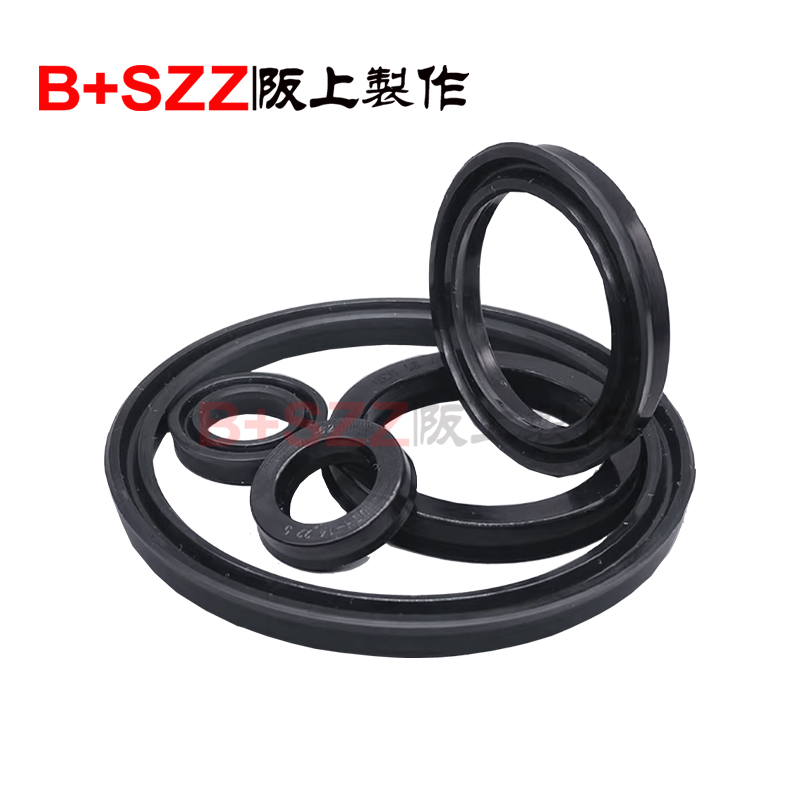
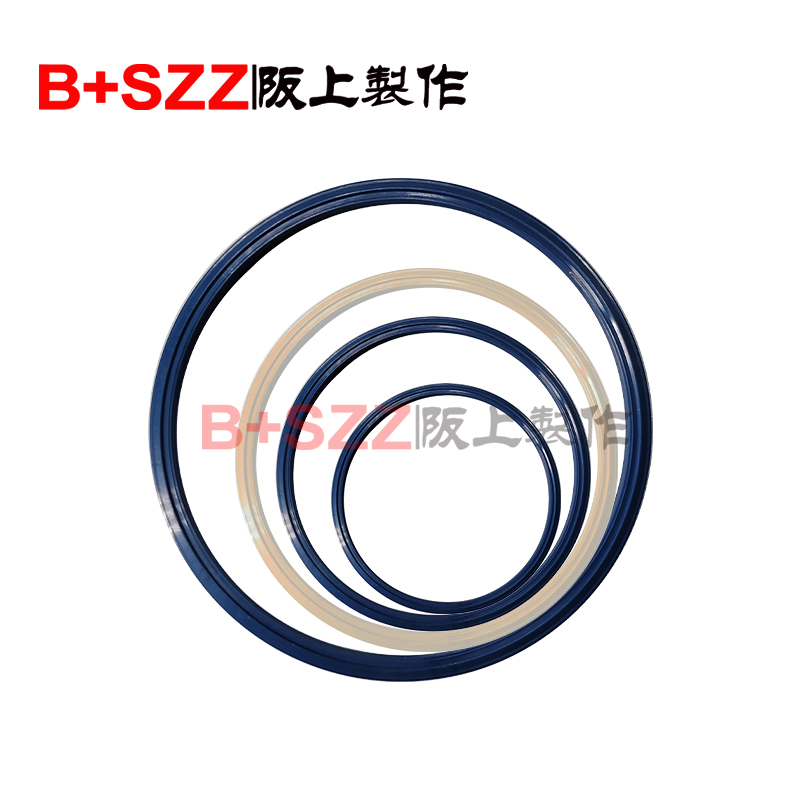
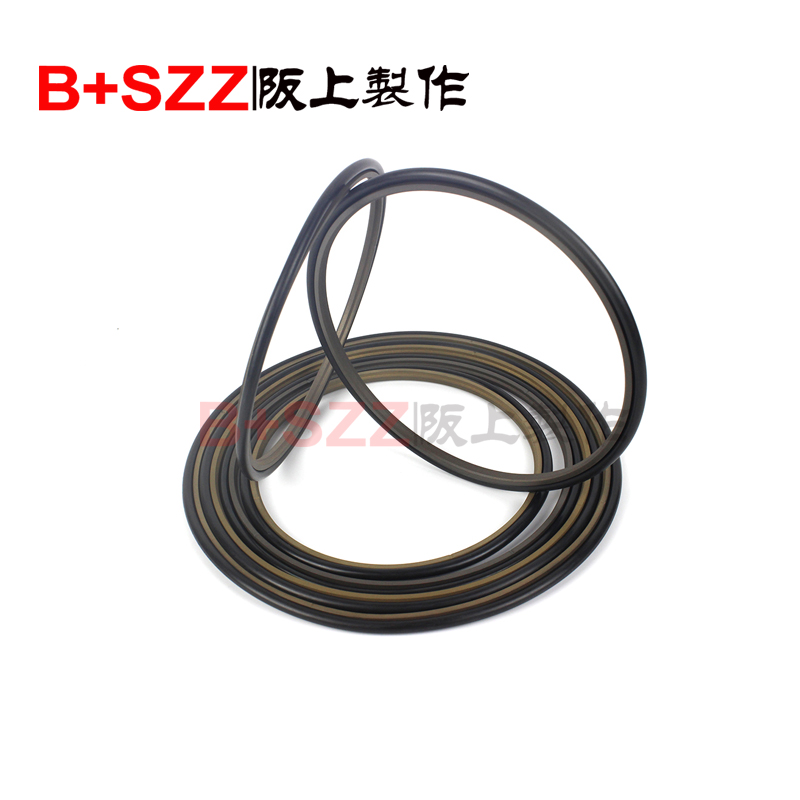
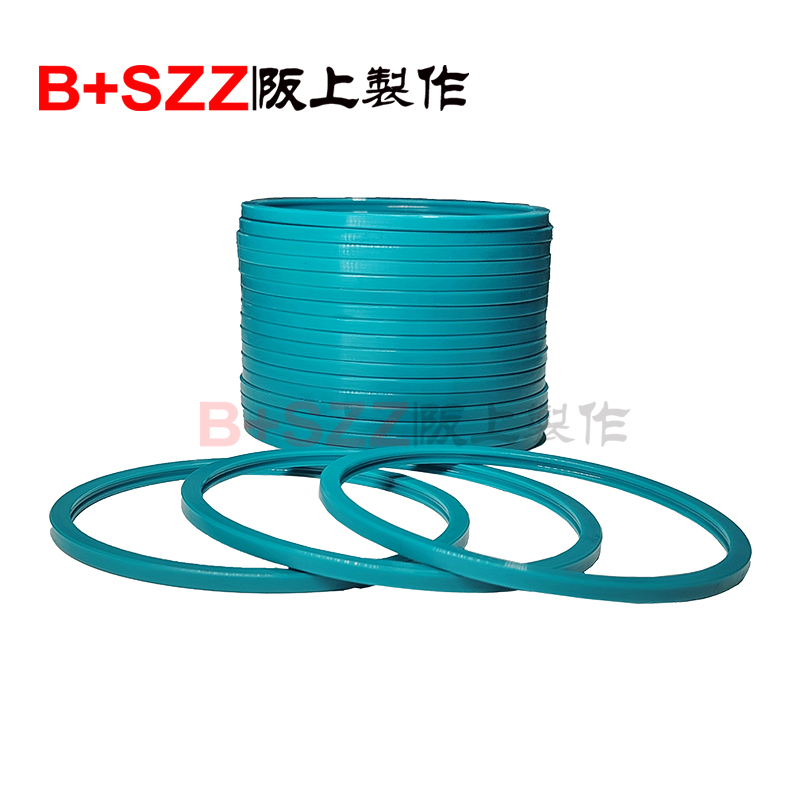
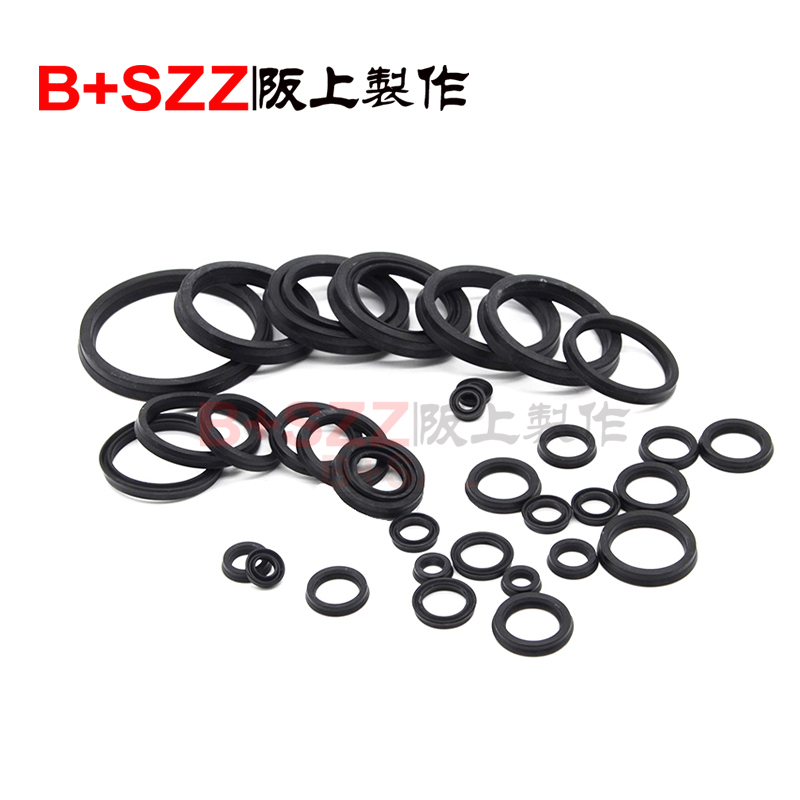
The SPGA-Type Piston Rod Seal is a revolutionary sealing solution engineered for ultra-high pressure systems where conventional seals fail due to extrusion or excessive friction heat. Utilizing the patented SPGA (Self-Pressurizing Gas-Actuated) technology, this seal actively generates a counter-pressure barrier through an integrated inert gas reservoir, creating a dynamic pressure equilibrium that virtually eliminates extrusion while maintaining near-zero leakage under extreme conditions up to 150 MPa.
Hermetic Inert Gas Capsule: Sealed nitrogen chamber (5-15 MPa pre-charge) embedded within the seal body
Pressure-Transmitting Diaphragm: Flexible metal alloy membrane separating gas reservoir from hydraulic medium
Automatic Pressure Regulation: Gas pressure automatically adjusts based on system pressure through elastic diaphragm deformation
Primary Band: Gas-pressure-enhanced polyurethane lip with micro-porous surface for lubricant retention
Center Band: PTFE-based labyrinth seal creating controlled leakage for lubrication film formation
Outer Band: Carbon-fiber reinforced anti-extrusion ring with temperature-triggered expansion properties
Embedded Fiber Optic Sensors: Real-time monitoring of pressure distribution across sealing interface
Gas Pressure Indicator: Visual optical indicator shows gas reservoir pressure status
Wireless Health Monitoring: Integrated Bluetooth module transmits seal health data to maintenance systems
| Parameter | Specification | Test Standard |
|---|---|---|
| Pressure Range | Dynamic: 0-120 MPa Static: 0-150 MPa Peak: 180 MPa (5 min) |
ISO 5597-1 |
| Gas Pre-charge | 5, 10, or 15 MPa (customizable) | DOT 49 CFR 173.304 |
| Temperature Range | -50°C to +180°C With cooling option: -70°C to +230°C |
ASTM D1329 |
| Friction Coefficient | 0.03-0.15 (pressure-dependent) | ASTM D1894 |
| Leakage Rate | < 0.0005 ml/hour @ 100 MPa | ISO 7986 |
| Extrusion Resistance | Gap tolerance: up to 0.8 mm @ 100 MPa | ISO 3601-5 |
| Response Time | < 5 ms for pressure equilibrium | MIL-STD-810H |
| Component | Material | Special Treatment | Function |
|---|---|---|---|
| Gas Capsule | Inconel 718 | Electron beam welding | Gas containment |
| Primary Seal | HPU (95 Shore D) | Nanoparticle impregnation | Main sealing |
| Labyrinth Seal | Glass-filled PTFE | Laser micro-grooving | Controlled lubrication |
| Anti-Extrusion Ring | Carbon-PEEK composite | Pyrolytic coating | Gap bridging |
| Diaphragm | Beryllium copper alloy | Age hardening | Pressure transmission |
System Pressure ↑ → Diaphragm Deforms → Gas Compresses → Gas Pressure ↑
                                               ↓
Counter-pressure Balances System Pressure → Net Extrusion Force → 0
                                               ↓
Sealing Lip Maintains Optimal Contact Pressure → Minimum Friction + Maximum Seal
Key Advantage: The seal automatically adjusts its internal counter-pressure to match system pressure, maintaining optimal sealing force without excessive contact pressure that causes wear.
Hyper-Pressure Hydraulics: 10,000+ psi industrial presses, isostatic presses
Offshore & Subsea: Christmas tree valves, BOP systems, ROV manipulators
Aerospace: Landing gear systems, flight control actuators, rocket fuel systems
Energy: Hydraulic fracturing equipment, downhole tools, accumulator systems
Defense: Weapon recoil systems, submarine hydraulic systems
Hydraulic presses for diamond synthesis (150+ MPa)
Deep-sea mining equipment (10,000m depth capability)
Aircraft carrier catapult systems
Nuclear reactor control rod drives
High-pressure water jet cutting (600 MPa systems)
Pre-installation Check: Verify gas reservoir pressure using SPGA indicator
Charging Port Access: Ensure charging valve is accessible after installation
Alignment: Use SPGA-specific installation tool with pressure-balanced insertion
Torque Sequence: Follow cross-pattern tightening to specified torque values
Field Charging Kit: Portable charging station with pressure regulator
Gas Options: Nitrogen (standard), Argon (high-temperature), Helium (cryogenic)
Charging Port: Standard 1/8″ NPT with self-sealing valve
Safety Features: Pressure relief valve at 1.5× rated pressure
Optical Indicator: Green/Yellow/Red pressure status indicator
Wireless Module: Bluetooth 5.2 with 100m range
Industrial Protocols: Modbus RTU, CAN bus, Ethernet/IP options
Gas Pressure Trend Monitoring: Predicts gas leakage before seal failure
Wear Compensation Indicator: Shows remaining seal life based on gas pressure changes
Temperature Alert: Wireless alert if seal temperature exceeds safe limits
Pressure Relief Valve: Prevents over-pressurization of gas reservoir
Fail-Safe Mode: If gas pressure is lost, seal reverts to conventional operation with reduced pressure rating
Leak Detection: External sensor detects gas leakage before it affects performance
Field Rechargeable: Can be recharged without removing from equipment
Service Interval: 5 years or 10,000 operating hours (whichever comes first)
Disposal: Gas can be safely vented before seal disposal
Eliminates Extrusion: Gas counter-pressure prevents seal material extrusion even in large gaps
Reduced Friction: Optimal contact pressure minimizes heat generation
Pressure-Adaptive: Automatically adjusts to any pressure up to rating
Predictable Life: Gas pressure decay provides accurate life prediction
Fail-Safe Operation: Maintains basic sealing even if gas system is compromised
Pressure Vessel Certification: ASME BPVC Section VIII
Aerospace: AS9100D, NASA-STD-6012
Offshore: API 6A, 17D, DNVGL-RP-0441
Testing: 50,000+ pressure cycles at 120 MPa, 1000-hour salt spray, vibration testing per MIL-STD-167
Engineering Note: The SPGA technology represents a paradigm shift from passive to active pressure management in sealing. The gas counter-pressure system reduces net extrusion forces by up to 80% compared to conventional seals. For applications above 180 MPa, consult our engineering department for custom SPGA-X configurations. System compatibility analysis recommended for non-standard hydraulic fluids.
Original source: Hydraulic seal https://www.bszzseal.com/